


Unfortunately, today, due to cervical osteochondrosis, the symptoms of head and neck pain are familiar to almost every adult.And in 70% of the population over 25 years of age (possibly earlier), these symptoms occur periodically.Doctors make a diagnosis - cervical osteochondrosis and prescribe treatment, depending on the stage and nature of the disease.
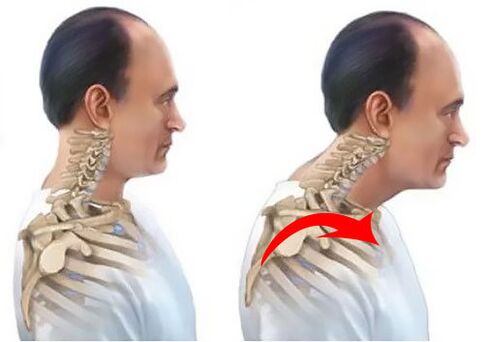
What is cervical osteochondrosis?
These are degenerative changes in the intervertebral discs of the spine that occur due to uneven loading on the spine.The vertebral bodies from the first to the seventh cervical region are gradually deformed, exhausted and destroyed.The main and main symptom of cervical osteochondrosis is headache, while pain can be reflected in the neck, chest, as well as in the shoulder and other parts of the spine.The cervical spine is connected to all its sections: thoracic, lumbar, sacral and coccygeal.All vertebrae are sequentially connected to each other vertically.And any violation of the cervical vertebrae affects the functioning of the entire spine.
Why can headaches be considered the main symptom of cervical osteochondrosis?
The cervical region is the most mobile of all parts of the spine and the most vulnerable.It contains very small vertebrae, much thinner than the vertebrae of other sections.Additionally, the neck must support the head at all times when walking upright.Tension of the neck muscles causes constant spasms of the blood vessels in the head and neck.Hence the headaches that occur from time to time, or that last for hours or days.A large number of muscles connect the back of the head to the neck.Eight short, deep muscles provide connection between the occipital bone and the first and second cervical vertebrae.Two deep muscles connect the back of the head to each of the seven cervical vertebrae.The longissimus muscles of the neck and capitis connect the back of the head and each vertebra to each other.Tension and spasms in any muscle can cause headaches and neck pain.Therefore, it is necessary to combat headaches, starting with the treatment of cervical osteochondrosis.
Other causes of cervical osteochondrosis
The causes of cervical osteochondrosis can be called the following factors:
- hereditary predisposition
- sedentary lifestyle
- overweight
- heavy loads on the spine
- stress and nervous shock
- metabolic disorders
- wearing the wrong shoes
- malnutrition
- pregnancy period
As you can see, there is no specific reason that leads to the development of cervical osteochondrosis.The process of degenerative changes in the intervertebral discs usually occurs slowly and imperceptibly.
Stages of development of cervical osteochondrosis.
Very often a person does not suspect that he has a disease such as cervical osteochondrosis, the symptoms, sensations, headache and neck pain, he prefers to ignore it or limits himself to taking painkillers.However, the development of osteochondrosis occurs in several stages:
- In the first stage, discomfort begins in the neck when walking for a long time, sitting for a long time at the computer or driving in one position.In this case, small compactions begin to form in the intervertebral discs.Degenerative changes in the vertebrae in the initial stage.
- At the second stage of the development of osteochondrosis, prolonged pain occurs in the back of the head, in the temporal part of the head and in the neck.There may be ringing in the ears, pain when tilting or turning the head.The mobility of the neck vertebrae begins to decrease and protrusion of the intervertebral discs is possible.
- In the third stage, headache attacks are pronounced.The person feels dizziness, shortness of breath, difficulty breathing.There may be pain in the shoulders and various parts of the spine.Neck mobility is limited.The annulus fibrosus of the intervertebral discs is destroyed, the nucleus pulposus loses its elasticity.Degenerative changes in the vertebral discs are pronounced.
- The last stage of the development of cervical osteochondrosis is characterized by the presence of intervertebral hernias.Most destructive changes are irreversible.Almost all parts of the spine are affected.Treatment is only possible through surgery.
Symptoms of cervical osteochondrosis.
Along with headaches and neck pain, depending on the stage of development of the cervical osteochondrosis process, a number of symptoms that accompany this disease can be mentioned:
- Feeling of heaviness in the head.
- Clicking of the vertebrae when turning or tilting the head.
- A crunchy sensation in the neck.
- Tinnitus and feeling of fullness.
- Dizziness
- Numbness in the shoulders or shoulder blades.
- chest pain
- Feeling short of breath
- lump in the throat
- feel nauseous
- Double vision, spots before the eyes.
- Increased body temperature
- Increased blood pressure
Symptoms may occur suddenly or be regular.Often, pain in the neck and nape of the neck makes itself felt at night.Sitting motionless in one position for many hours takes its toll.The vertebral arteries that carry blood to the brain are compressed and spasmed.As a result of the manifestation of circulatory disorders, the brain is mainly affected.Spasm of the arteries and muscles in the neck area often causes limited mobility.A person is temporarily, or more often, for a long period of time, unable to turn their neck.Dizziness, noise and ringing in the ears, a feeling of congestion also occurs as a result of decreased blood flow from the vertebral arteries to the head.Dizziness can be systemic and non-systemic.With systemic vertigo, a person experiences the sensation that objects are spinning in a circle around them.With non-systemic dizziness, there is no sensation of circular rotation, but there is an uncertain state when the body is standing, and nausea may also appear.
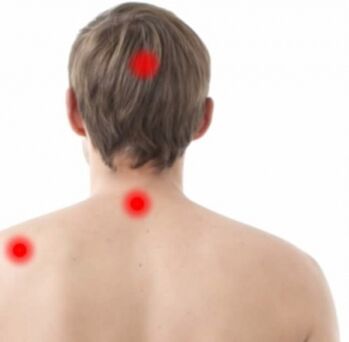
Often with cervical osteochondrosis, a pinched nerve occurs.This condition is caused by the displacement of the vertebrae to one side of the spine.Displaced vertebrae compress nerve endings, causing spasms of blood vessels and a feeling of shortness of breath.With a prolonged lack of oxygen, a person may experience shortness of breath.Rapid heartbeat, squeezing pain in the heart area, and increased blood pressure are common symptoms accompanying damage to the intervertebral discs of the cervical spine.
Consequences and complications of cervical osteochondrosis.
When normal blood flow in the vertebral arteries is disturbed, the autonomic nervous system suffers.Spasms of blood vessels and sudden increases in blood pressure can cause fainting.In case of fainting, first aid should be provided to the person immediately.It is necessary to position the body so that the legs are higher than the head, this will lead to normal blood circulation in the neck and activate the flow to the brain.Sometimes, in order to develop the cervical vertebrae and stretch the stiffness of the neck when the body is in one position for a long time, a person begins to turn his head strongly and quickly to the left and right.As a result, the vertebral arteries spasm and, instead of a state of relief, the person begins to feel dizziness, ringing in the ears and a sharp headache, which can also lead to increased blood pressure and fainting.
The main and common complication of cervical osteochondrosis is the appearance of intervertebral hernias and protuberances.A herniated disc is the result of the degradation and destruction of the intervertebral disc.With hernias and protrusions, compression and protrusion of the contents of the annulus fibrosus occurs in any direction.In this case, the person feels constant pain due to the friction of the compressed intervertebral discs against each other.The most serious complication of cervical osteochondrosis can be considered a disease - myelopathy, in which the spinal cord is destroyed.Myelopathy is most frequently located in the cervical spine.With this disease, a person feels numbness or tingling in the extremities, weakness and involuntary contractions of the muscles of the body, pain appears in the chest and between the shoulder blades.
Diagnosis and detection of cervical osteochondrosis.
If you have one or more symptoms indicating the onset of cervical osteochondrosis, you should consult a doctor.A neurologist or orthopedist will examine the patient to evaluate pain and mobility of the cervical spine, identify associated symptoms, and recommend necessary diagnostic measures.The most reliable in our time is magnetic resonance imaging (MRI).As a result of the examination, the presence of cervical osteochondrosis, as well as a protrusion or hernia in the patient, can be detected with 100% accuracy.Contraindications to MRI diagnosis include the presence of a pacemaker in the patient.Childhood and pregnancy are not contraindications because MRI does not involve exposure toX-ray, as a method of detecting cervical osteochondrosis, is applicable only in the early stages of the disease.The advantages of this examination method are speed, accessibility and low cost.X-rays can only reveal the degree of changes in the intervertebral discs, excluding examination of the soft tissues, muscles and nerve fibers of the neck.
Prevention of cervical osteochondrosis.
To prevent the appearance of cervical osteochondrosis, some tips can be listed:
- Avoid lifting heavy objects.If you need to lift something heavy, you must correctly distribute the load throughout the spine.
- Avoid sitting for long periods in the same position, avoid watching television for many hours without changing body position.
- The bed and pillow for sleeping and resting should be comfortable.An orthopedic mattress and an anatomical orthopedic pillow, selected according to individual size, are desirable.
- It is necessary to follow rules to prevent curvature of posture.The correct and level position of the head, neck and back when walking and sitting guarantees the health of not only the cervical region, but also the entire spine.
- Adequate nutrition with abundant protein foods, cereals, fruits and vegetables will provide the body with the necessary vitamins and microelements.
- Including foods such as gelatin, jellied meats, fish and seafood that contain collagen in your diet will undoubtedly be beneficial for the bones, ligaments and cartilage of the skeleton.
- Correct and sufficient consumption of simple clean water will prevent the contents of the intervertebral discs from drying out and cervical osteochondrosis from occurring.
- Exercise and physical activity are very important at any age.In addition to walking in the fresh air, jogging, swimming, water aerobics, yoga and Pilates are very useful.
Treatment.Feeling symptoms of cervical osteochondrosis.
To treat cervical osteochondrosis, medications, physiotherapy, massage, special exercises and gymnastics are used, and in extreme cases, surgical intervention is not excluded.Analgesics are used successfully to relieve pain.Non-steroidal drugs are indicated to relieve the inflammatory process.For muscle spasms, doctors recommend relaxants.For regular spasms of the neck muscles, you will need to wear a special orthopedic collar.Anti-inflammatory ointments are used to reduce pain.For slow cervical osteochondrosis, without exacerbations, physiotherapy procedures are prescribed.Well proven in the treatment of osteochondrosis of the neck: magnetic therapy, electrophoresis, UHF and shock wave therapy.During physiotherapy, inflammatory processes in the body decrease and blood supply to the cervical spine improves.Regular massage is also indicated for osteochondrosis.
Among the exercises for the treatment of cervical osteochondrosis, 5 basic ones, performed at a slow pace, are widely used.The exercises should be repeated three to five times.
- Exercise one.It consists of slowly turning your head left and right.The shoulders remain motionless.
- Exercise two.It is necessary to press the forehead with the palm of the hand, slightly tensing the neck muscles.
- Exercise three.It consists of tilting the head to the left and to the right, while when tilting to the left the head must be lowered as low as possible and touching the left ear with the left shoulder, and when tilting to the right touch the right ear with the right shoulder.
- Exercise four.It is recommended to press with the left palm on the temple on the left side of the head, and similarly with the right palm to press on the temple on the right side of the head.
- Exercise five.Slowly tilt your chin toward your neck, while turning your head first to the left and then to the right.
These simple but effective exercises can be done every day with 10-15 minutes of free time.
Conclusion
In our body, the spine has five sections.The cervical spine deserves special attention.Due to the complex symptoms, the presence of many concomitant diseases and the lack of sufficient control, the occurrence of cervical osteochondrosis is a serious problem.From the usual mild discomfort in the neck, without adequate treatment, the intervertebral discs begin to undergo degenerative changes, causing a lot of discomfort to the person.Dizziness, pain in the occipital and temporal parts of the head, neck pain, ringing and noise in the ears are the main, but not the only, symptoms of cervical osteochondrosis.To prevent cervical osteochondrosis from progressing to irreversible changes and consequences at the stage of appearance, you should adhere to simple rules of nutrition and water regime, regularly engage in physical exercise, monitor your posture and head position when walking, standing or sitting.Prolonged immobilization of the body is strictly contraindicated.